Klejenie dętki na gorąco skuteczna wulkanizacja 2026
Przez years I've seen countless inner tubes condemned to the scrap heap when a solid repair could've saved them - often because the mechanic reached for cold glue out of habit, not knowledge. Hot bonding, commonly called vulcanization, creates a chemical fusion between the patch and the rubber that cold adhesive simply can't replicate. If you've ever wondered why some patches pop off after a few weeks while others hold for years, the answer usually lies in the temperature at which the bond was formed. This method isn't just about sticking rubber to rubber; it's about rekindling the molecular chains that made the original tube whole.
- Przygotowanie powierzchni przed klejeniem dętki na gorąco
- Niezbędne narzędzia i materiały do wulkanizacji dętki
- Zalety metody klejenia dętki na gorąco
- Klejenie dętki na gorąco - najczęściej zadawane pytania
Przygotowanie powierzchni przed klejeniem dętki na gorąco
Surface preparation determines whether your repair survives the first bump or the next thousand kilometers. You need to strip away every trace of contaminants - dust, old lubricant, rubber residue - because any foreign material acts as a barrier between the vulcanizing compound and the tube itself. Start by inflating the tube just enough to locate the puncture, then mark the damage zone with a piece of chalk. The damaged area must be clearly visible before you touch it with any abrasive tool.
Grinding follows, and here precision matters more than force. A coarse emery cloth (around 80-grit) removes the surface layer, exposing fresh rubber underneath. Work in circular motions, keeping the texture uniform across the entire repair zone. If you leave high spots or uneven scratches, the patch won't sit flush, and gaps will trap air or moisture. After grinding, wipe the surface twice with a clean cloth dampened in lighter fluid - once to remove rubber dust, once to eliminate any oils your fingers might have left behind. Let it evaporate completely; any residual solvent compromises the bond.
The puncture itself requires special attention. Enlarge it slightly with a proper vulcanization needle or awl, creating a shape that the hot patch can fill rather than merely cover. For pinhole punctures, this means boring out to roughly 2-3 mm diameter. Larger tears may need trimming to create clean, parallel edges - ragged rubber tears don't bond well because the patch can't make full contact. Cut away any bulging or separated layers; you want a stable, uniform surface that the heat can penetrate evenly.
Sidewall damage presents additional challenges because the rubber compounds differ from the tube body. The sidewall cures differently during manufacturing, leaving a harder, less porous surface. Roughen it more aggressively than the rest of the tube, extending your prep area well beyond the visible damage. Many technicians apply a thin primer coat specifically formulated for sidewall repairs before placing the patch. This step isn't optional when the repaired section will flex constantly under load.
Sprawdzenie szczelności przed klejeniem
Before applying any heat, submerge the prepared section in water and apply gentle pressure. Watch for bubbles - they reveal hidden perforations you might have missed during visual inspection. Patch only the obvious damage, and you'll return days later to find the tube flat again because a second pinhole was hiding nearby. This simple test takes three minutes and prevents callbacks. Mark every leak with a waterproof marker, then proceed with your surface preparation around those marks.
Niezbędne narzędzia i materiały do wulkanizacji dętki
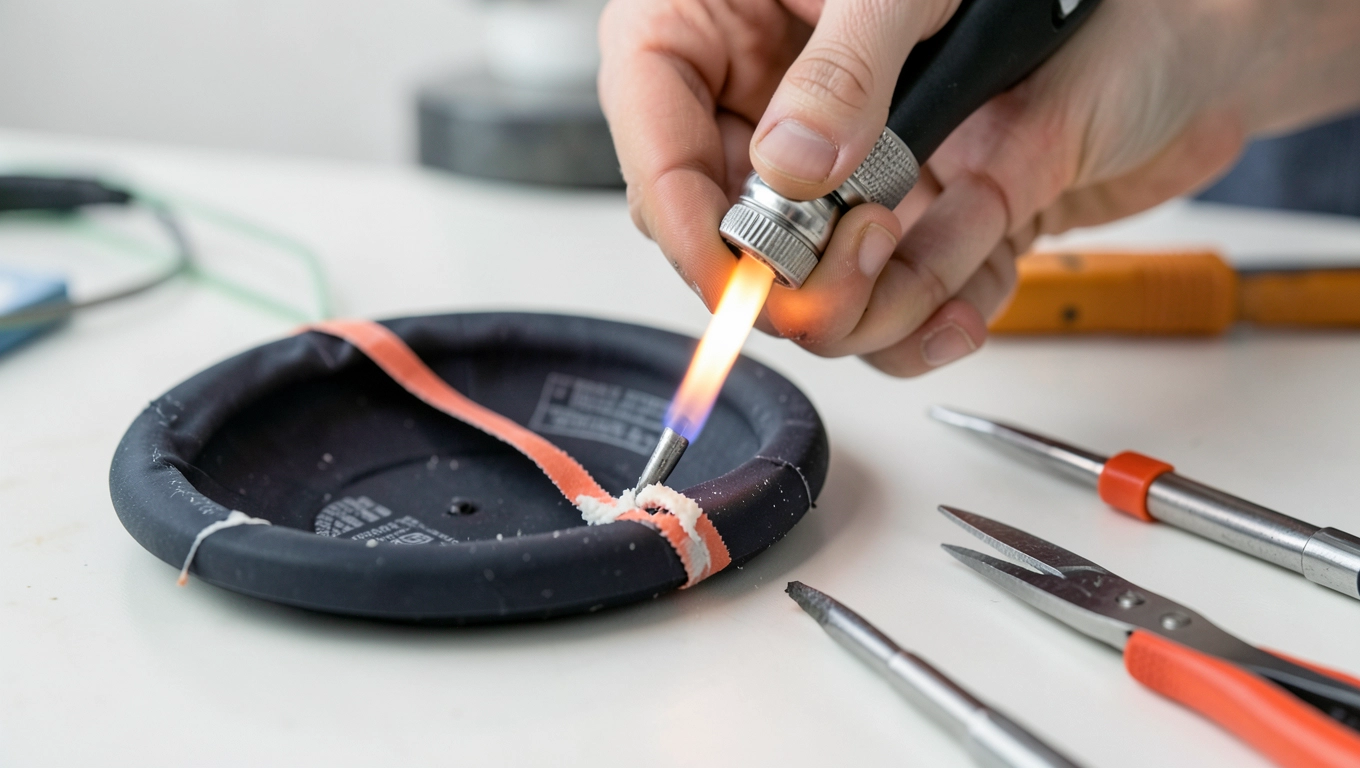
You don't need a professional workshop to achieve factory-quality repairs, but you do need equipment that reaches consistent temperatures. The core of hot bonding is heat - applied uniformly and held within a narrow range. Electric vulcanizers dominate because they eliminate the guesswork of open-flame methods. Look for a device that maintains 80-100°C at the contact surface for the duration of the cure cycle, typically 15-25 minutes depending on patch size and tube thickness.
The patches themselves differ fundamentally from cold-cure alternatives. Hot patches contain raw rubber compounds that actually melt and fuse with the tube material under temperature, creating a molecular bond rather than a mechanical one. They come in various shapes: circular for pinholes, rectangular for slash cuts, and triangular for corner stress. Choose the shape that matches your damage geometry - never stretch a round patch over a long tear because the edges won't make full contact. Quality patches have a smooth surface on the bonding side and a fabric mesh on the outer face for reinforcement.
Adhesive selection matters as much as the patch. The rubber cement applied before heating serves two purposes: it holds the patch in place during setup, and it begins softening the rubber surfaces so the hot patch can penetrate deeper. Use only cement specifically rated for vulcanization - standard contact adhesive burns rather than bonds when heated. Apply a thin, even layer and let it become tacky before positioning the patch. Too much cement creates a gummy layer that interferes with fusion; too little fails to hold the patch steady during clamping.
Elementy wyposażenia uzupełniającego
A vulcanizer press or clamp provides the pressure that forces the molten rubber into the tube's microscopic surface texture. Without pressure, you get a surface bond that looks solid but fails under stress. The force should be distributed evenly across the entire patch - dedicated vulcanizers include interchangeable pads for different patch sizes. Improvised solutions like C-clamps work only if you protect the tube with rubber or wooden inserts to prevent crushing.
Supporting tools include a trimming knife for removing excess rubber after curing, a valve core tool for deflating the tube, and a simple pressure gauge to verify the vulcanizer's temperature accuracy. Some technicians keep a heat-resistant glove nearby for positioning patches in hot equipment. A clean workspace matters too - rubber dust and debris can embed in the uncured adhesive, creating weak points in your repair. Lay out all components before starting, and work methodically from first heating to final inspection.
Zalety metody klejenia dętki na gorąco
Trwałość stands as the most compelling argument for hot bonding. The chemical fusion achieved at 80°C creates a joint where the patch and tube share the same polymer matrix - essentially becoming one continuous piece of rubber. Cold adhesive cures by solvent evaporation, leaving a boundary layer where delamination eventually occurs. Studies comparing repair methods show hot-vulcanized patches surviving cyclic stress tests that destroy cold-bonded equivalents within the same number of flexion cycles. When a patch must handle the constant deformation of a rolling tire, that molecular continuity makes the difference between a permanent repair and a temporary fix.
Uszkodzenia in demanding positions - particularly the sidewalls and bead zones - respond far better to heat than to cold glue. These areas flex more dramatically, generating heat and stress that concentrate at repair edges. A cold patch acts like a stiff bandage, restricting movement in the repaired zone and transferring stress to the surrounding rubber. A vulcanized patch moves with the tube because it possesses the same elasticity. The repair point no longer represents a structural weakness; in many cases, the vulcanized section actually exceeds the original tube's resistance to abrasion because the patch compound can be harder than the base rubber.
The cost efficiency becomes apparent when you calculate long-term expense rather than per-repair price. A cold patch that fails after three months costs more than a hot bond that lasts the tube's remaining service life. Add the value of reduced downtime, eliminated roadside emergencies, and the environmental benefit of extended equipment life, and the economics shift decisively toward vulcanization. For professional operations handling high volumes, the initial equipment investment pays back within the first dozen repairs.
Kiedy wybrać metodę na gorąco, a kiedy unikać
Choose hot bonding whenever the tube will continue service in demanding conditions - heavy loads, high speeds, rough terrain, or extended storage between uses. Any repair expected to outlast the remaining tire life belongs on a vulcanizer. Small punctures in low-stress applications might justify cold glue for speed and convenience, but even then, consider whether that "quick fix" will demand re-repair after the first serious load test.
Some damage patterns make hot bonding inadvisable. Punctures larger than 6 mm in diameter typically cannot be repaired reliably by any method, hot or cold - the remaining rubber simply cannot support the structural loads. Chemical contamination of the rubber, visible as swelling or discoloration, indicates degraded material that won't bond properly even under ideal conditions. Heat damage from previous repairs or from the original failure also compromises the substrate. In these cases, replacement remains the only reliable solution, despite the temptation to salvage what appears salvageable.
Hot bonding requires patience and precision. Rushing the preparation or skipping steps to save time typically results in repairs that fail spectacularly - the patch detaches mid-ride, often damaging the tire in the process. Invest the extra twenty minutes in proper surface preparation, and you'll likely never need to repair that spot again.
Klejenie dętki na gorąco - najczęściej zadawane pytania
Co to jest klejenie dętki na gorąco i czym różni się od metody na zimno?
Klejenie dętki na gorąco to metoda naprawy opon wykorzystująca proces wulkanizacji, czyli łączenie materiału z oponą pod wpływem wysokiej temperatury. W przeciwieństwie do metody na zimno, klejenie na gorąco zapewnia znacznie trwalsze połączenie, które charakteryzuje się dłuższą żywotnością naprawionej opony. Jest to jedna z najtrwalszych metod naprawy opon, szczególnie skuteczna przy większych ubytkach bieżnika i ścian bocznych.
Jak prawidłowo przygotować powierzchnię dętki przed klejeniem na gorąco?
Prawidłowe przygotowanie powierzchni jest kluczowe dla skutecznej naprawy. Należy dokładnie oczyścić uszkodzone miejsce za pomocą papieru ścierngo, aby usunąć wszystkie zanieczyszczenia i stare gumowe wióry. Powierzchnia musi być sucha i wolna od kurzu. Następnie aplikuje się specjalny klej oraz nakłada łatkę wulkanizacyjną z mieszanki gumowej, która zostaje aktywowana podczas procesu grzewczego.
Jakie materiały są potrzebne do klejenia dętki na gorąco?
Do klejenia dętki metodą na gorąco potrzebne są: łatki wulkanizacyjne wykonane ze specjalnej mieszanki gumowej, surowa guma do wypełnienia ubytków, wysokiej jakości klej wulkanizacyjny oraz narzędzia do podgrzewania. Proces wymaga podgrzania gumowej mieszanki do temperatury około 80°C oraz zastosowania odpowiedniego docisku przy użyciu urządzeń wulkanizacyjnych. Firmą specjalizującą się w wyposażeniu wulkanizacyjnym jest STIX.
W jakich przypadkach warto stosować metodę klejenia na gorąco?
Metoda klejenia na gorąco jest szczególnie polecana przy większych uszkodzeniach opony, takich jak rozległe ubytki bieżnika, przetarcia ścian bocznych czy większe przebicia. Jest to najtrwalsza opcja naprawy, dlatego warto ją stosować gdy zależy nam na długiej żywotności naprawionej opony. Metoda ta sprawdza się zarówno w przypadku dętek rowerowych, motocyklowych jak i samochodowych, zapewniając trwałe i wodoodporne połączenie.
Jakie korzyści daje stosowanie łatek klejonych na gorąco?
Łatki klejone na gorąco charakteryzują się wyjątkową trwałością połączenia z oponą. Proces wulkanizacji sprawia, że materiał łatki trwale integruje się z gumą opony, tworząc jednolitą strukturę odporną na odklejanie się. Metoda ta zapewnia lepszą szczelność naprawy, odporność na wilgoć oraz przedłuża żywotność opony w porównaniu do standardowych łatek samoprzylepnych. Jest to inwestycja w bezpieczeństwo i trwałość naprawy.
Jakie urządzenia są potrzebne do profesjonalnego klejenia dętki na gorąco?
Do profesjonalnego klejenia dętki metodą wulkanizacyjną potrzebne jest urządzenie do podgrzewania, które umożliwia osiągnięcie temperatury około 80°C. Kluczowy jest też odpowiedni docisk podczas procesu grzewczego, który zapewnia równomierne połączenie materiałów. STIX oferuje kompleksowe wyposażenie wulkanizacyjne obejmujące zarówno urządzenia grzewcze, jak i specjalistyczne materiały do klejenia na gorąco, umożliwiające skuteczną naprawę opon w warunkach profesjonalnych.